Ihram, Tawaf, Sa'i and cutting the hair — the Hanafi way, with every dua in Arabic, English and Urdu, notes for ladies, and a free printable PDF.
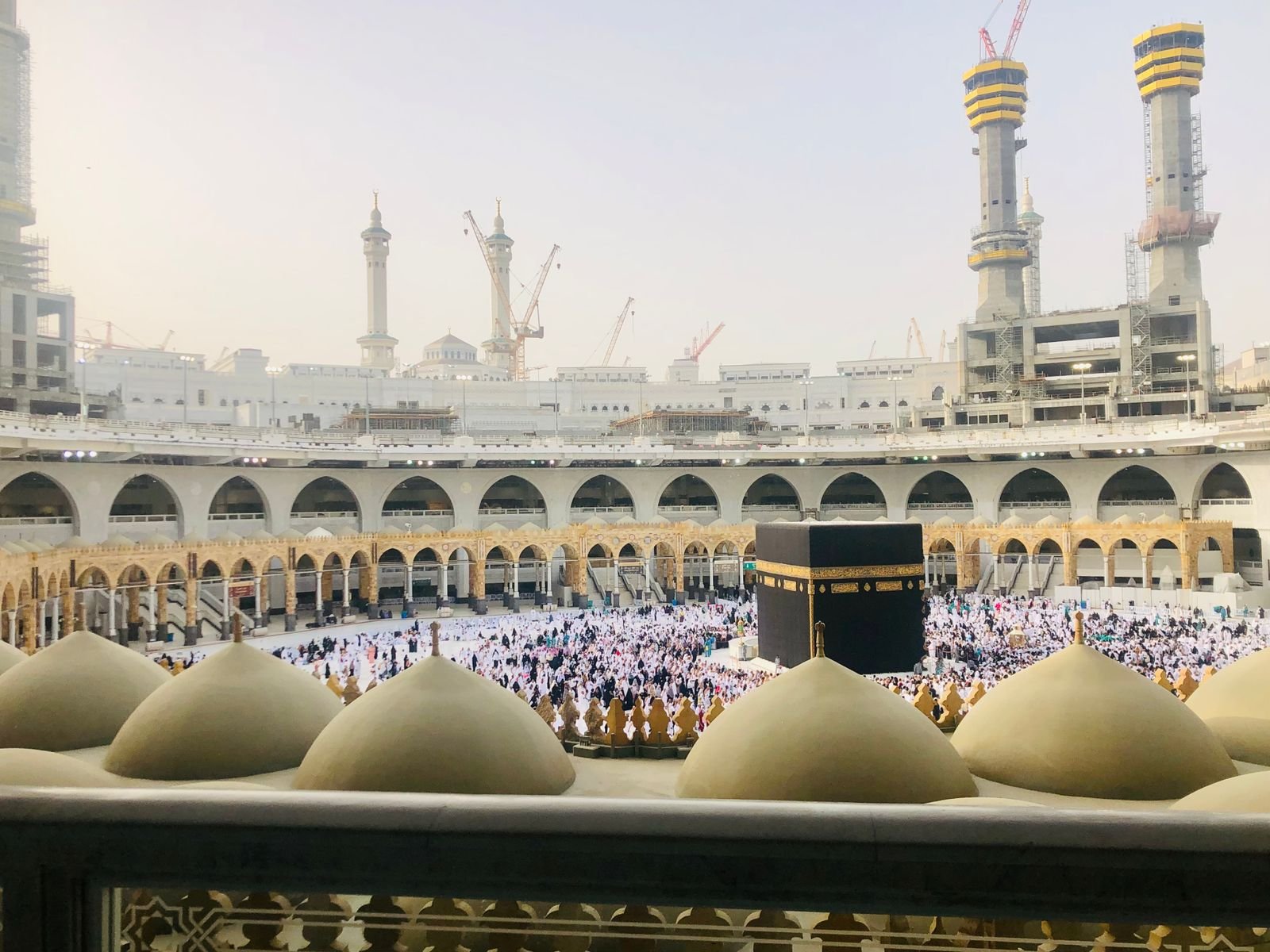
In short: To perform Umrah, put on ihram and make the intention before the miqat (from Pakistan, usually on the plane before Jeddah), recite the Talbiyah, do seven rounds of Tawaf around the Ka'bah and pray two rak'ahs, walk seven laps of Sa'i between Safa and Marwah, then shave or trim your hair. Women trim a fingertip's length.
Umrah ka tarika: ihram, tawaf, sa'i, phir baal katwana.
This guide is written for the first-time pilgrim from Pakistan — often a parent travelling for the first time, or a couple who want everything in order and in their own language. It follows the Hanafi school, which most Pakistani pilgrims follow, and notes where other schools differ. Every dua below is from the Qur'an or an authentic hadith, with its reference, in Arabic, transliteration, English and Urdu. You can also download the free printable PDF in Urdu and English to keep on your phone. If you want the full Ihram restrictions table and Sa'i lap counting, our step-by-step guide to performing Umrah covers the rites in more detail.
That is the whole of Umrah. Everything else in this guide — the duas, the ladies' rulings, the mistakes to avoid — is there to help you do these four steps calmly and correctly.
سُبْحَانَ الَّذِي سَخَّرَ لَنَا هَٰذَا وَمَا كُنَّا لَهُ مُقْرِنِينَ، وَإِنَّا إِلَىٰ رَبِّنَا لَمُنْقَلِبُونَ
Subhanalladhi sakhkhara lana hadha wa ma kunna lahu muqrinin, wa inna ila Rabbina la-munqalibun.
Glory be to the One who has placed this at our service, for we could never have done it ourselves, and to our Lord we will surely return.
پاک ہے وہ ذات جس نے اسے ہمارے بس میں کر دیا، ہم خود اسے قابو میں نہیں لا سکتے تھے، اور بے شک ہم اپنے رب کی طرف لوٹ کر جانے والے ہیں۔
Reference: Qur'an 43:13–14; the Prophet ﷺ said it when setting out on a journey — Sahih Muslim 1342
Your first Umrah starts weeks before you board the flight. Make sure your passport has at least six months' validity, your Umrah visa and documents are confirmed with our team, and you know the name of your Makkah hotel.
The miqat is the boundary that a pilgrim heading for Makkah may not cross without ihram. Flights from Pakistan to Jeddah cross it in the air, near Qarn al-Manazil or Yalamlam depending on the route, so the crew announces it before landing. Jeddah airport is inside the miqat — waiting to put on ihram there is a mistake.
The intention (niyyah). The intention is in the heart: that you are entering ihram for Umrah. Many pilgrims also say it aloud, for example "Allahumma inni uridul-'umrata fa-yassirha li wa taqabbalha minni" (O Allah, I intend Umrah, so make it easy for me and accept it from me) — this is wording recommended in Hanafi fiqh books, not a fixed text from a hadith, so any words with the same meaning are fine. In the Hanafi school, you enter ihram with the intention together with the Talbiyah, so recite it straight after the intention.
لَبَّيْكَ اللَّهُمَّ لَبَّيْكَ، لَبَّيْكَ لَا شَرِيكَ لَكَ لَبَّيْكَ، إِنَّ الْحَمْدَ وَالنِّعْمَةَ لَكَ وَالْمُلْكَ، لَا شَرِيكَ لَكَ
Labbayka Allahumma labbayk, labbayka la sharika laka labbayk, innal-hamda wan-ni'mata laka wal-mulk, la sharika lak.
Here I am, O Allah, here I am. Here I am, You have no partner, here I am. All praise and blessings are Yours, and the dominion. You have no partner.
حاضر ہوں، اے اللہ میں حاضر ہوں۔ حاضر ہوں، تیرا کوئی شریک نہیں، میں حاضر ہوں۔ بے شک تمام تعریف اور نعمت تیری ہی ہے اور بادشاہی بھی، تیرا کوئی شریک نہیں۔
Reference: Sahih al-Bukhari 1549; Sahih Muslim 1184
Men say the Talbiyah aloud; women say it so that only they can hear. Keep repeating it on the plane, on the bus and in Makkah until you start Tawaf.
Not allowed in ihram:
Flying into Madinah first? Then you do not need ihram on the flight. When you leave Madinah for Makkah, you enter ihram at Dhul Hulaifah (Masjid ash-Shajarah, also called Abyar Ali), just outside the city. Your group guide will tell you which applies to your flight.
When you reach your hotel in Makkah, rest if you need to, make wudu and go to Masjid al-Haram. Enter with your right foot first:
بِسْمِ اللَّهِ وَالسَّلَامُ عَلَىٰ رَسُولِ اللَّهِ، اللَّهُمَّ افْتَحْ لِي أَبْوَابَ رَحْمَتِكَ
Bismillah, was-salamu 'ala Rasulillah. Allahummaftah li abwaba rahmatik.
In the name of Allah, and peace be upon the Messenger of Allah. O Allah, open for me the doors of Your mercy.
اللہ کے نام سے، اور اللہ کے رسول ﷺ پر سلام ہو۔ اے اللہ! میرے لیے اپنی رحمت کے دروازے کھول دے۔
Reference: Sahih Muslim 713; Sunan Ibn Majah 771
Seeing the Ka'bah. Many pilgrims make dua when they first see the Ka'bah. There is no fixed wording that is authentically reported for this moment, so ask Allah for whatever you wish, in any language.
Before you start. Be in wudu — in the Hanafi school, purity is required for Tawaf. Stop the Talbiyah when you begin Tawaf. Men uncover the right shoulder (idtiba): the upper sheet goes under the right arm and over the left shoulder, for the whole of this Tawaf.
Start at the Black Stone line. Stand facing the Black Stone (Hajar al-Aswad) — a green light on the wall marks the line. Raise your hands as in prayer and make the intention for Tawaf. Kissing or touching the Stone (istilam) is Sunnah only if it is possible without pushing; otherwise point to it with your right hand and say:
اللَّهُ أَكْبَرُ
Allahu akbar.
Allah is the Greatest.
اللہ سب سے بڑا ہے۔
Reference: Sahih al-Bukhari 1613 — the Prophet ﷺ pointed to the corner and said takbir
Walk seven rounds with the Ka'bah on your left, starting and ending each round at the Black Stone line and repeating the takbir each time. Men walk briskly with short steps (raml) in the first three rounds only, if the crowd allows.
There is no fixed dua for each round. Booklets that give a "dua for round one, round two" and so on are not from the Sunnah. Use the rounds for your own duas, dhikr and Qur'an, in Arabic or Urdu. Between the Yemeni Corner and the Black Stone, the Prophet ﷺ recited:
رَبَّنَا آتِنَا فِي الدُّنْيَا حَسَنَةً وَفِي الْآخِرَةِ حَسَنَةً وَقِنَا عَذَابَ النَّارِ
Rabbana atina fid-dunya hasanatan wa fil-akhirati hasanatan wa qina 'adhaban-nar.
Our Lord, give us good in this world and good in the Hereafter, and protect us from the punishment of the Fire.
اے ہمارے رب! ہمیں دنیا میں بھی بھلائی عطا فرما اور آخرت میں بھی بھلائی عطا فرما، اور ہمیں آگ کے عذاب سے بچا۔
Reference: Qur'an 2:201; recited between the two corners — Sunan Abi Dawud 1892
Two rak'ahs. After the seventh round, men cover the right shoulder again. Pray two rak'ahs behind Maqam Ibrahim if there is space, or anywhere in the mosque — this is necessary (wajib) in the Hanafi school, and should not be prayed in a disliked time.
وَاتَّخِذُوا مِنْ مَقَامِ إِبْرَاهِيمَ مُصَلًّى
Wattakhidhu min maqami Ibrahima musalla.
And take the standing place of Ibrahim as a place of prayer.
اور مقامِ ابراہیم کو نماز کی جگہ بناؤ۔
Reference: Qur'an 2:125; recited by the Prophet ﷺ, who then read Surah al-Kafirun and Surah al-Ikhlas in the two rak'ahs — Sahih Muslim 1218
Zamzam. Drink Zamzam water, standing or sitting, and make your own dua. The Prophet ﷺ said, "The water of Zamzam is for whatever it is drunk for" (Sunan Ibn Majah 3062). There is no fixed Zamzam dua to learn.
Go to Safa, which is signposted inside the mosque. As you approach it for the first time, recite:
إِنَّ الصَّفَا وَالْمَرْوَةَ مِنْ شَعَائِرِ اللَّهِ — أَبْدَأُ بِمَا بَدَأَ اللَّهُ بِهِ
Innas-Safa wal-Marwata min sha'a'irillah. Abda'u bima bada'allahu bih.
Indeed, Safa and Marwah are among the symbols of Allah. I begin with what Allah began with.
بے شک صفا اور مروہ اللہ کی نشانیوں میں سے ہیں۔ میں وہیں سے شروع کرتا ہوں جہاں سے اللہ نے شروع فرمایا۔
Reference: Qur'an 2:158; Sahih Muslim 1218
Climb Safa a little, face the Ka'bah, raise your hands as in dua and say the following three times, making your own dua in between:
اللَّهُ أَكْبَرُ، اللَّهُ أَكْبَرُ، اللَّهُ أَكْبَرُ، لَا إِلَٰهَ إِلَّا اللَّهُ وَحْدَهُ لَا شَرِيكَ لَهُ، لَهُ الْمُلْكُ وَلَهُ الْحَمْدُ وَهُوَ عَلَىٰ كُلِّ شَيْءٍ قَدِيرٌ، لَا إِلَٰهَ إِلَّا اللَّهُ وَحْدَهُ، أَنْجَزَ وَعْدَهُ، وَنَصَرَ عَبْدَهُ، وَهَزَمَ الْأَحْزَابَ وَحْدَهُ
Allahu akbar, Allahu akbar, Allahu akbar. La ilaha illallahu wahdahu la sharika lah, lahul-mulku wa lahul-hamdu wa huwa 'ala kulli shay'in qadir. La ilaha illallahu wahdah, anjaza wa'dah, wa nasara 'abdah, wa hazamal-ahzaba wahdah.
Allah is the Greatest (three times). There is no god but Allah alone, without partner; His is the dominion and His is the praise, and He has power over all things. There is no god but Allah alone; He fulfilled His promise, helped His servant and alone defeated the confederates.
اللہ سب سے بڑا ہے (تین بار)۔ اللہ کے سوا کوئی معبود نہیں، وہ اکیلا ہے، اس کا کوئی شریک نہیں، اسی کی بادشاہی ہے اور اسی کے لیے سب تعریف ہے، اور وہ ہر چیز پر قادر ہے۔ اللہ کے سوا کوئی معبود نہیں، وہ اکیلا ہے، اس نے اپنا وعدہ پورا کیا، اپنے بندے کی مدد کی اور اکیلے ہی لشکروں کو شکست دی۔
Reference: Sahih Muslim 1218
Walk to Marwah — that is one lap. Repeat the same dhikr and dua on Marwah, then walk back to Safa for the second lap. Seven laps end at Marwah. Men walk briskly between the two green lights; women walk normally throughout.
Men either shave the whole head (halq), which is better, or trim the hair from the whole head (qasr). In the Hanafi school, at least a quarter of the head must be shaved or trimmed by about a fingertip's length; cutting only a few strands is not enough. Barbers are available around the Haram.
Women never shave. They gather the hair and cut about a fingertip's length from the ends — in the Hanafi school this must cover at least a quarter of the hair, and cutting all of it is better. Do this in private, at the hotel, yourself or with the help of a mahram or another woman.
Other schools differ on the minimum: Shafi'is accept a few hairs, while Malikis and Hanbalis ask for hair from the whole head. Trimming the whole head satisfies every school.
With that, your Umrah is complete. You can change into normal clothes and all the ihram restrictions end. Alhamdulillah.
Women perform the same four steps as men. These are the differences, following the Hanafi school:
For what to wear, the mahram rules and a packing list, read our Umrah guide for women (clothing, mahram, packing).
These are the duas linked to the rites of Umrah, in the order you meet them. Each is from the Qur'an or an authentic hadith, with its reference. None of them is a condition for Umrah: if you forget one, your Umrah is still valid. Personal duas in your own language are always fine, and there is no special dua for each round of Tawaf or Sa'i.
The full Arabic, transliteration, English and Urdu of each dua is in the step where you use it above, and all of them are in the free PDF. When you leave the mosque, step out with the left foot first and say:
اللَّهُمَّ إِنِّي أَسْأَلُكَ مِنْ فَضْلِكَ
Allahumma inni as'aluka min fadlik.
O Allah, I ask You of Your bounty.
اے اللہ! میں تجھ سے تیرے فضل کا سوال کرتا ہوں۔
Reference: Sahih Muslim 713
Visiting Madinah is not part of Umrah, and your Umrah is complete without it. Praying in Masjid an-Nabawi carries great reward, and the Prophet ﷺ said that a journey may be made specially to three mosques, one of them his mosque in Madinah (Sahih al-Bukhari 1189), so most groups from Pakistan spend part of the trip there. A visit to Riaz ul Jannah (the Rawdah) needs a permit booked in the Nusuk app; our team helps you book it, and the current limits are explained in our Umrah new rules guide. The steps and timings are in our Riaz ul Jannah permit guide. For the places to visit in both cities, see our ziyarat guide.
After your Umrah, plan your visits with our guide to ziyarat places in Makkah and Madinah.
عمرہ کے چار بنیادی کام ہیں: احرام، طواف، سعی اور بال منڈوانا یا کٹوانا۔ یہ طریقہ فقہ حنفی کے مطابق ہے۔
۱۔ احرام اور نیت: گھر یا ایئرپورٹ پر غسل کر کے مرد دو سفید چادریں پہنیں اور خواتین اپنے عام باپردہ کپڑے۔ مکروہ وقت نہ ہو تو دو رکعت نفل پڑھیں۔ پاکستان سے جدہ کی پرواز میں میقات جہاز ہی میں آتا ہے؛ عملہ اعلان کرتا ہے۔ میقات سے پہلے دل میں عمرہ کی نیت کریں اور تلبیہ پڑھیں:
لَبَّيْكَ اللَّهُمَّ لَبَّيْكَ، لَبَّيْكَ لَا شَرِيكَ لَكَ لَبَّيْكَ، إِنَّ الْحَمْدَ وَالنِّعْمَةَ لَكَ وَالْمُلْكَ، لَا شَرِيكَ لَكَ
مرد تلبیہ بلند آواز سے پڑھیں، خواتین آہستہ۔ احرام میں خوشبو، بال یا ناخن کاٹنا منع ہے؛ مرد سر نہ ڈھانپیں اور خواتین نقاب یا دستانے نہ پہنیں۔
۲۔ طواف: مسجد الحرام میں دایاں قدم پہلے رکھیں اور یہ دعا پڑھیں: بِسْمِ اللَّهِ وَالسَّلَامُ عَلَىٰ رَسُولِ اللَّهِ، اللَّهُمَّ افْتَحْ لِي أَبْوَابَ رَحْمَتِكَ۔ باوضو ہو کر حجرِ اسود کی سیدھ سے طواف شروع کریں، ہر چکر کے شروع میں «اللہ اکبر» کہیں، اور کعبہ کو بائیں جانب رکھ کر سات چکر لگائیں۔ مرد پورے طواف میں دایاں کندھا کھلا رکھیں اور پہلے تین چکروں میں رمل کریں۔ ہر چکر کی کوئی الگ مقرر دعا نہیں؛ اپنی زبان میں دعا کریں۔ رکنِ یمانی اور حجرِ اسود کے درمیان یہ پڑھیں:
رَبَّنَا آتِنَا فِي الدُّنْيَا حَسَنَةً وَفِي الْآخِرَةِ حَسَنَةً وَقِنَا عَذَابَ النَّارِ
طواف کے بعد مقامِ ابراہیم کے پیچھے یا مسجد میں کہیں بھی دو رکعت پڑھیں اور آبِ زمزم پئیں۔
۳۔ سعی: صفا پر چڑھ کر کعبہ کی طرف رخ کریں، «إِنَّ الصَّفَا وَالْمَرْوَةَ مِنْ شَعَائِرِ اللَّهِ» پڑھیں، پھر تین بار تکبیر و تہلیل اور اپنی دعا کریں۔ صفا سے مروہ تک ایک چکر ہے؛ ساتواں چکر مروہ پر ختم ہوتا ہے۔ مرد سبز روشنیوں کے درمیان تیز چلیں، خواتین عام رفتار سے۔
۴۔ حلق یا قصر: مرد پورا سر منڈوائیں یا پورے سر کے بال کٹوائیں؛ کم از کم چوتھائی سر ضروری ہے۔ خواتین کم از کم چوتھائی بالوں کے سروں سے انگلی کے پور کے برابر بال الگ جگہ پر کاٹیں۔ اب عمرہ مکمل ہو گیا۔
خواتین کے لیے: ایام کی حالت میں بھی میقات پر احرام باندھیں، مگر پاک ہونے اور غسل کرنے تک مسجد میں داخل نہ ہوں اور طواف نہ کریں۔ پاک ہونے کے بعد پہلے طواف اور پھر سعی کریں۔
مسجد سے نکلتے وقت بایاں قدم پہلے رکھیں اور پڑھیں: اللَّهُمَّ إِنِّي أَسْأَلُكَ مِنْ فَضْلِكَ۔ تمام دعائیں حوالوں کے ساتھ اردو پی ڈی ایف میں موجود ہیں۔ دیانت ٹریولز کا گروپ گائیڈ ہر مرحلے پر آپ کی رہنمائی کرتا ہے۔ واٹس ایپ: 0330-3786333
Roman Urdu: Umrah ka tarika — miqat se pehle ihram aur niyyat, Talbiyah, Ka'bah ke 7 chakkar tawaf, 2 rakat, Safa Marwah ki 7 chakkar sa'i, phir baal mundwana ya katwana.
Umrah step by step — Urdu and English (A4, 3 pages). The four steps, every dua with its reference, the ladies' notes and a short checklist. Print it or keep it on your phone. No sign-up, no form.
The PDF carries the same text as this page, so you can read everything here too.
Our group guide walks you through every step in Makkah — when to put on ihram for your flight, the first Tawaf and Sa'i together after arrival, and where the barbers are. To pick a date and hotel, compare our Umrah packages 2026 from Pakistan and the dated Umrah price list, or message us on WhatsApp at 0330-3786333.
Ready to book? Compare Umrah packages 2026 from Pakistan with flights, visa and hotels included.
For dated prices by city, trip length and room type, see our Umrah price list 2026.
This guide gives the Hanafi rulings most Pakistani pilgrims follow, checked by Diyanat Travels' group guide. For a question about your own situation, ask a qualified scholar.
Visit us at Basement Amna Arcade, GT Road, Wah Cantt 47020 — or message us on WhatsApp at 0330-3786333. Government licensed (DTS-12187).
 Umrah Guide
The six rites in detail — the Ihram restrictions table, Tawaf, counting the Sa'i laps and notes for elderly pilgrims.
Read article → Umrah Guide
Practical clothing, mahram and packing guidance for women performing Umrah.
Read article → Cost
What Umrah costs from Pakistan for one person, a couple and a family of four, worked out from our live group prices.
Read article →Put on ihram and make the intention with the Talbiyah before the miqat; do seven rounds of Tawaf and pray two rak'ahs; walk seven laps of Sa'i from Safa to Marwah; then shave or trim your hair. Women trim about a fingertip's length. That completes Umrah.
Umrah mein koi dua farz nahin. Sunnat se sabit duain yeh hain: Talbiyah, masjid mein dakhil hone ki dua, Hajar-e-Aswad par Allahu akbar, Rukn-e-Yamani aur Hajar-e-Aswad ke darmiyan Rabbana atina, Safa par Inna as-Safa aur takbir-o-tahlil, aur masjid se nikalne ki dua. Baqi apni zaban mein jo chahein mangein.
The same four steps as men, with these differences: ihram is her normal modest clothing, the face is not covered by cloth that touches it, the Talbiyah is said quietly, there is no raml, idtiba or jogging between the green lights, and she cuts about a fingertip's length from at least a quarter of her hair, in private.
No. No authentic hadith gives a separate dua for each round. Say Allahu akbar at the Black Stone, recite Rabbana atina between the Yemeni Corner and the Black Stone, and use the rest of the time for your own duas, dhikr or Qur'an in any language.
Yes. Many pilgrims put on the ihram clothes at home or at the airport before boarding, because the plane crosses the miqat in the air. The intention and Talbiyah can wait until the crew announces the miqat, as long as it is before crossing it.
She still enters ihram at the miqat and stays in ihram, but she does not enter the mosque or do Tawaf until her period ends and she has taken a bath. Then she does Tawaf followed by Sa'i. If her return flight is close, she should ask her group guide or a scholar before travelling.
No. Visiting Madinah is not part of Umrah, and your Umrah is complete without it. Praying in Masjid an-Nabawi is a great reward, so most groups from Pakistan include Madinah in the trip.
Yes. We serve pilgrims from Wah Cantt, Hasan Abdal, Taxila, Rawalpindi and Islamabad. Our office is on GT Road, Wah Cantt, or you can arrange everything on WhatsApp.